
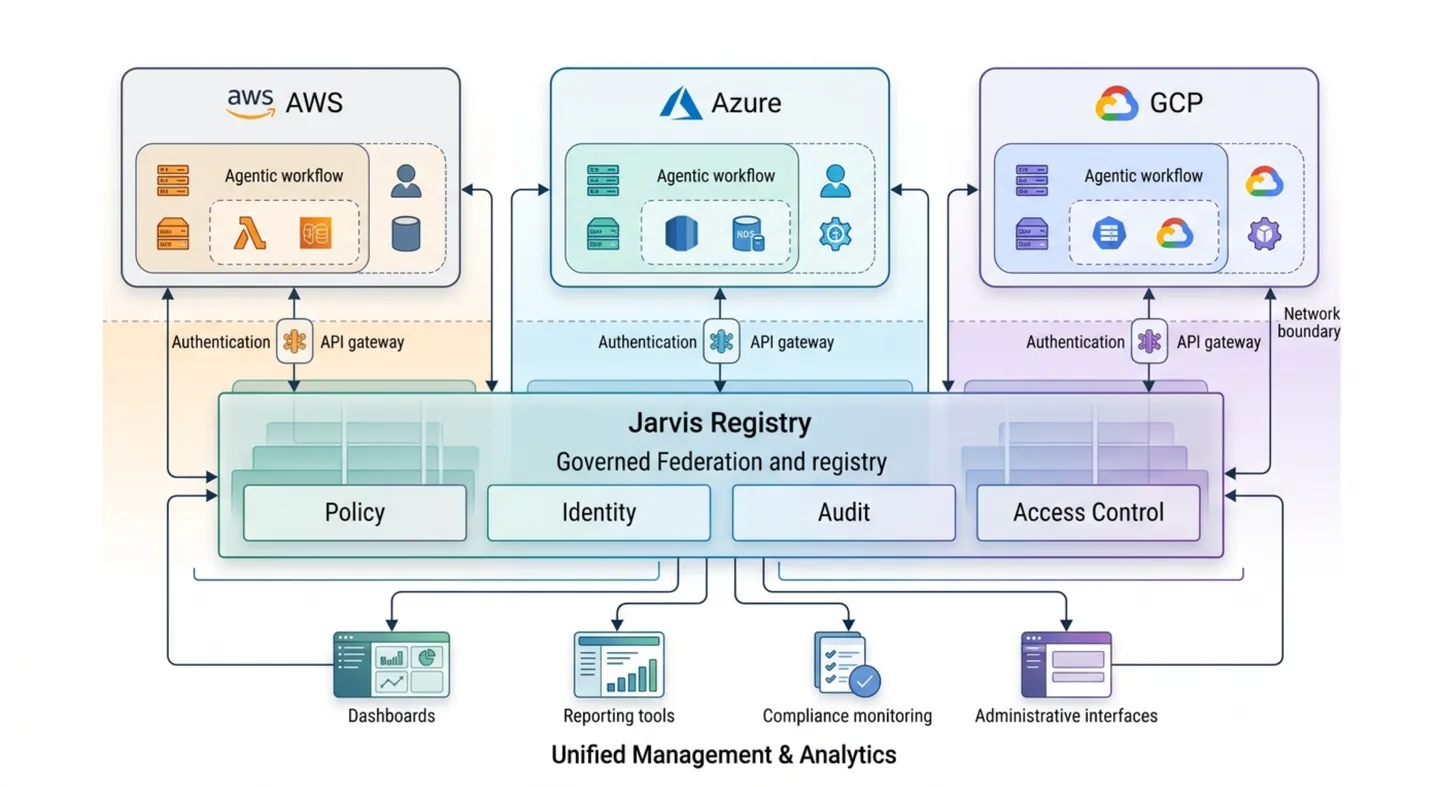
Teams often assume that once an AI agent works in one cloud, it can be connected to agents in another cloud with a few API calls. In practice, orchestrating an end-to-end agentic workflow across AWS, Azure, and GCP is not a simple integration task. It is a systems problem involving identity boundaries, network boundaries, and policy boundaries that are different in each environment.
The challenge is not just getting calls to pass. The challenge is making the workflow reliable, secure, auditable, and maintainable for enterprise operations.
The Reality of Multicloud Agentic Workflows
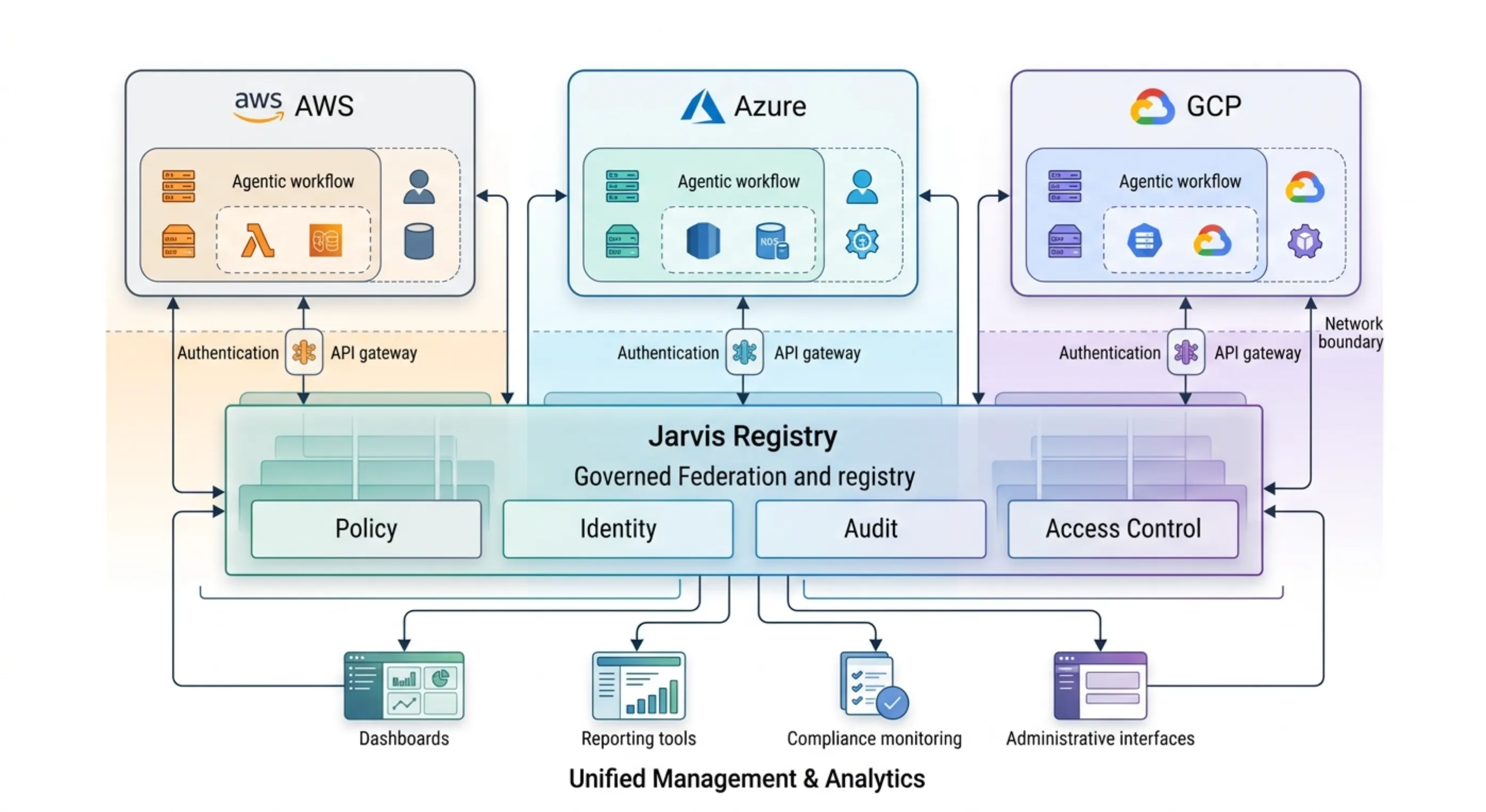
A multicloud agentic workflow usually includes:
- Agents running in different trust zones.
- Different identity providers and token formats.
- Different ingress and egress controls at each cloud edge.
- Different network topologies and routing requirements.
- Different logging, audit, and policy enforcement mechanisms.
When these pieces are assembled ad hoc, workflows become brittle. A minor policy update in one cloud can silently break cross-cloud calls in another.
Why It Gets Hard, Fast
1. Ingress and Egress Controls Are Not Symmetric
Each cloud platform has its own way of defining who can enter, who can call out, and under which conditions traffic is allowed. What appears as a simple “agent A calls agent B” pattern often becomes a patchwork of allowlists, service endpoints, gateway policies, and outbound restrictions.
Common failure pattern: inbound is open enough for testing, but production egress policies block callback flows, model tool calls, or chained agent invocations.
2. Authentication and Authorization Drift
Cross-cloud workflows often combine IAM roles, service principals, workload identities, API keys, and short-lived tokens. Even when authentication succeeds, authorization may fail because policy semantics differ by platform.
Teams can reduce architecture drift by aligning these decisions with established guidance from the AWS Well-Architected Framework, the Azure Well-Architected Framework, and the Google Cloud Architecture Framework.
Result: teams spend more time mapping identities and policy assumptions than building business logic.
3. Network Topology and Latency Complexity
Agents are sensitive to latency and timeout behavior, especially when workflows are iterative or tool-heavy. Cross-cloud routes can add unpredictable latency, and private networking patterns (VPC/VNet peering alternatives, private endpoints, NAT boundaries) can complicate connectivity.
Result: workflows pass in happy-path demos but degrade in real-world traffic.
4. Security and Compliance Fragmentation
Enterprises need to prove who invoked what, with which permissions, against which version of an agent, and under what policy. In multicloud setups, telemetry and audit trails are often fragmented.
Result: governance reviews become manual, incident response slows down, and risk posture weakens.
5. Operational Sprawl Across Teams
Without a central contract for agent definitions and access policies, every team reinvents integration and security controls. Duplication increases, behavior diverges, and production consistency drops.
Result: delivery slows while operational overhead rises.
What Enterprises Actually Need
To run multicloud agentic workflows in production, teams need more than connectivity. They need a consistent control plane for governed federation:
- A unified way to publish and discover governed agents.
- Standardized identity and access controls across environments.
- Explicit policy enforcement for inbound and outbound access.
- Versioned agent definitions with traceable change history.
- Enterprise-grade auditability that works across cloud boundaries.
This is where many homegrown approaches break down. They optimize for initial integration, not long-term governance and scale.
A Practical Path: Jarvis Registry
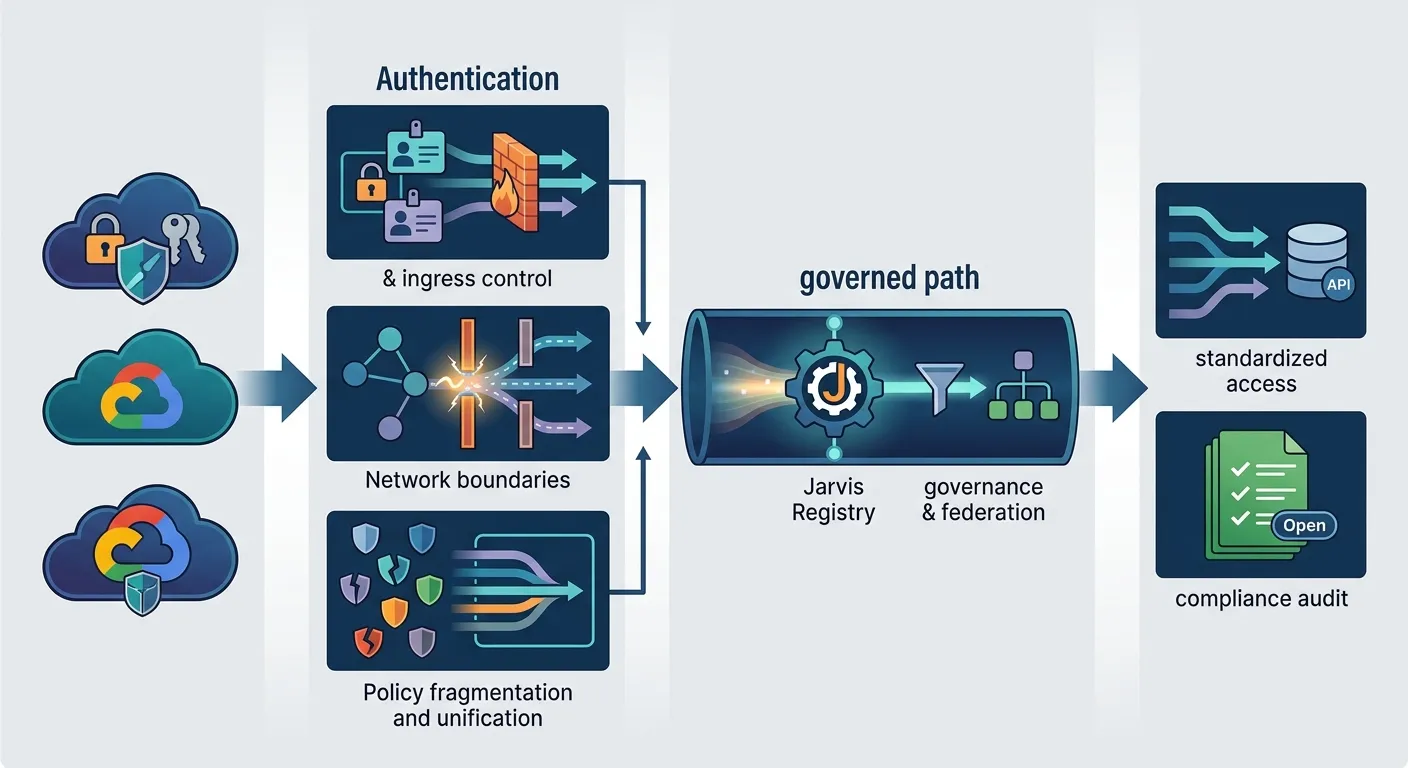
Jarvis Registry is an open-source project that addresses this challenge by acting as a governed registry and federation layer for agents, so teams can access and orchestrate agents from different environments through a consistent model. Learn more at jarvisregistry.com.
For AI interoperability patterns, it is also useful to track interface standards and tool invocation models such as Anthropic’s Model Context Protocol (MCP) and OpenAI function calling guidance.
In practice, this helps organizations:
- Reduce cross-cloud integration drift by centralizing governed agent contracts.
- Improve consistency so teams invoke approved agents the same way across platforms.
- Increase efficiency by reusing validated capabilities instead of rebuilding integrations.
- Strengthen governance with version control, access policy, and audit visibility.
- Support private hosting requirements for organizations that need infrastructure-level control.
For regulated and enterprise environments, private hosting is often non-negotiable. Jarvis Registry can be deployed to align with internal security boundaries and compliance requirements, instead of forcing critical agent governance into an external shared control plane.
Watch the Federation Demo
If you want to see this in action, this walkthrough demonstrates AWS AgentCore federation with Jarvis Registry and how governed agents can be accessed from any interface:
- AWS AgentCore Federation with Jarvis Registry: Access Governed Agents from Any Interface
- Azure AI Foundry Federation with Jarvis Registry: Access Governed Agents from Any Interface
Final Takeaway
Multicloud agent orchestration is difficult for structural reasons, not because teams lack skill. Ingress/egress policy mismatches, identity fragmentation, network complexity, and security governance gaps are expected at cloud boundaries.
The winning strategy is to treat agent federation as an enterprise architecture problem with a governed registry at the center. Jarvis Registry provides that foundation so organizations can scale agentic workflows across AWS, Azure, and GCP with consistency, efficiency, and control.
References
- AWS Well-Architected Framework: https://docs.aws.amazon.com/wellarchitected/latest/framework/welcome.html
- Azure Well-Architected Framework: https://learn.microsoft.com/azure/well-architected/
- Google Cloud Architecture Framework: https://cloud.google.com/architecture/framework
- Anthropic Model Context Protocol (MCP) Introduction: https://modelcontextprotocol.io/introduction
- OpenAI Function Calling Guide: https://platform.openai.com/docs/guides/function-calling
- Jarvis Registry: https://jarvisregistry.com
- AWS AgentCore Federation Demo: https://ascendingdc.com/jarvis-ai/videos/aws-agentcore-federation-with-jarvis-registry-access-governed-agents-from-any-interface/?autoplay=1
- Azure AI Foundry Federation Demo: https://ascendingdc.com/jarvis-ai/videos/azure-ai-foundry-federation-with-jarvis-registry-access-governed-agents-from-any-interface/?autoplay=1