

An AWS PPA (Private Pricing Agreement, the program many teams still call the Enterprise Discount Program, or EDP) is a committed-spend discount you negotiate with AWS for a defined-term usage commitment. Enterprise Support is mandatory in a cross-service PPA, and an authorized AWS partner such as ASCENDING can provide it as partner-led support.
AWS now structures the agreement cross-service, and the terms that matter to procurement and FinOps teams have shifted with it. This guide covers what to scrutinize during a PPA or EDP negotiation, the eligibility groundwork AWS expects, and where an authorized partner helps you get a better overall deal, including a cost line that a PPA never touches.
Last verified: 2026-10-07. AWS plan names and prices change; check the sources in References before you rely on a figure.
AWS PPA vs. EDP: same deal, new name and wider scope
AWS’s Private Pricing overview describes the current program plainly: a Private Pricing commitment covers more than 200 eligible AWS services over a defined term, available whether you buy directly from AWS or through an AWS partner. That cross-service breadth is the practical difference from the older EDP structure many enterprises are used to — a single commitment, spread across a much wider slice of your AWS bill, rather than a narrower set of core services.
If your last negotiation predates this shift, don’t assume the old deal shape still applies. Re-baseline your usage across the full service list AWS now includes before you propose a commitment number.
What to scrutinize during negotiation
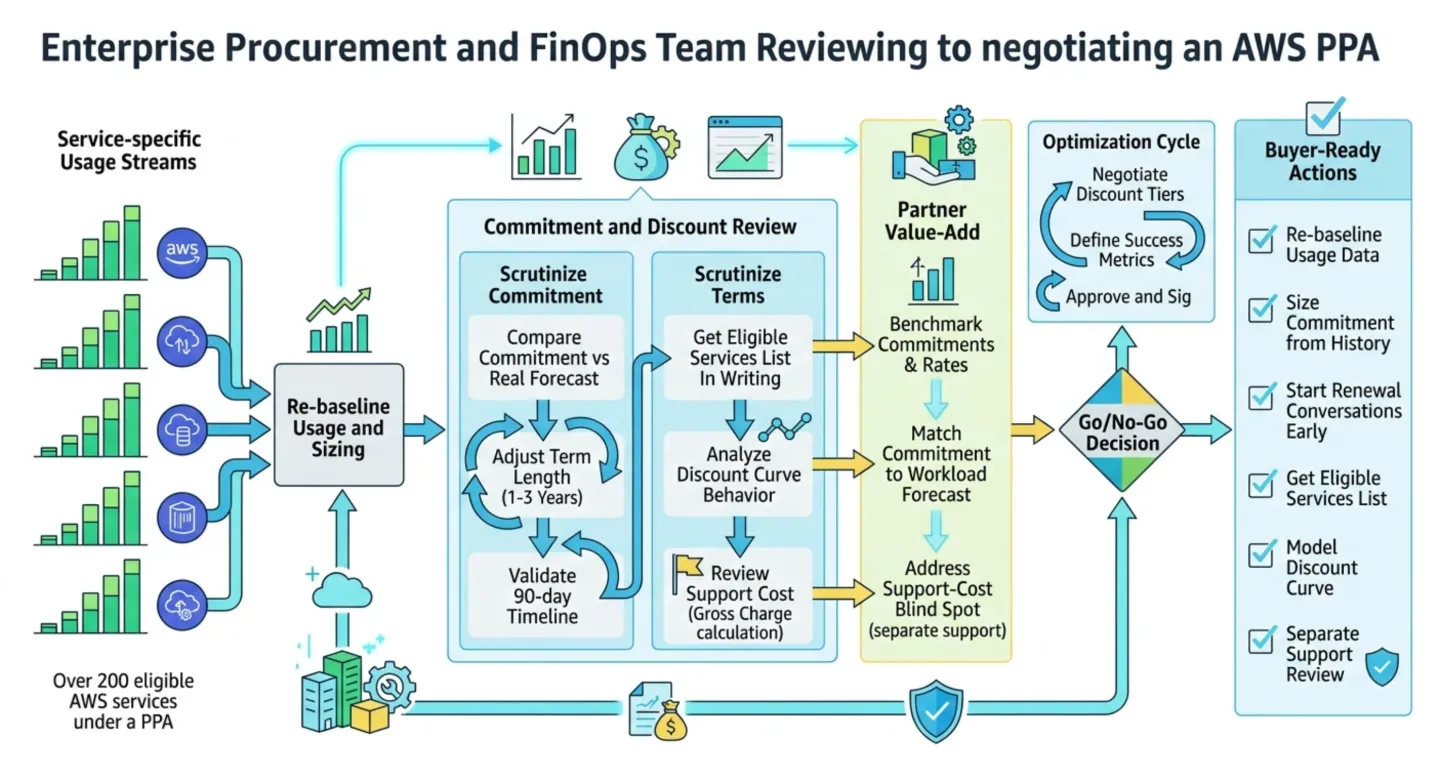
Commitment level vs. real forecast. The single biggest risk in any PPA is over-committing against a usage forecast that assumed continued growth. Build the commitment number from your actual multi-year usage trend, not a target you hope to hit.
Term length and timeline. Across the 10+ PPAs we support each year, a full cross-service negotiation typically takes around 90 days from initial proposal to signature — plan renewal conversations early enough that you’re not negotiating under deadline pressure. Some cycles can be expedited, but that usually depends on how prepared your usage data and internal approvals already are.
Which services actually count toward the commitment. Confirm the eligible-services list your AWS account team is proposing. Cross-service PPAs are broader than legacy EDPs, but “cross-service” doesn’t mean every service or every Marketplace purchase automatically counts — get the list in writing before you size the commitment.
How the discount curve behaves as usage grows. Model your effective rate at multiple usage levels across the term, not just at the commitment floor. A rate that looks attractive at your current spend can look very different once workloads scale.
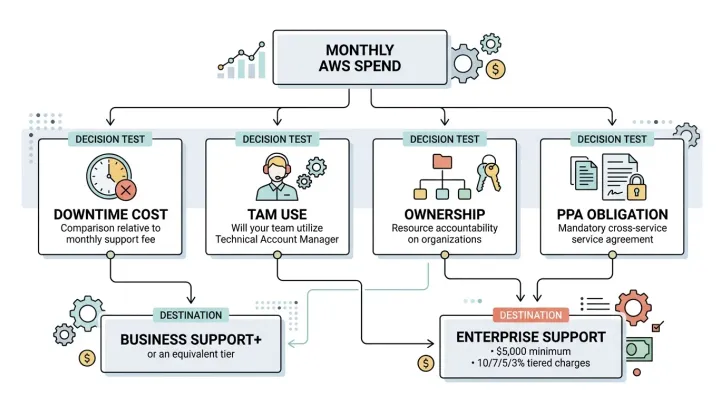
Support cost — the line a PPA never touches. This is the detail buyers most often miss. AWS calculates Enterprise Support (and Business Support) fees on your gross monthly AWS charges — before your PPA discount is applied, according to AWS Support pricing. Your negotiated PPA rate reduces what you pay for usage; it does nothing to the support percentage sitting on top of that gross figure. If support is a meaningful line item, it needs a separate review in the same budget cycle, not an assumption that a good PPA rate already covers it. To see the fee at your own spend, use the AWS Enterprise Support cost calculator.
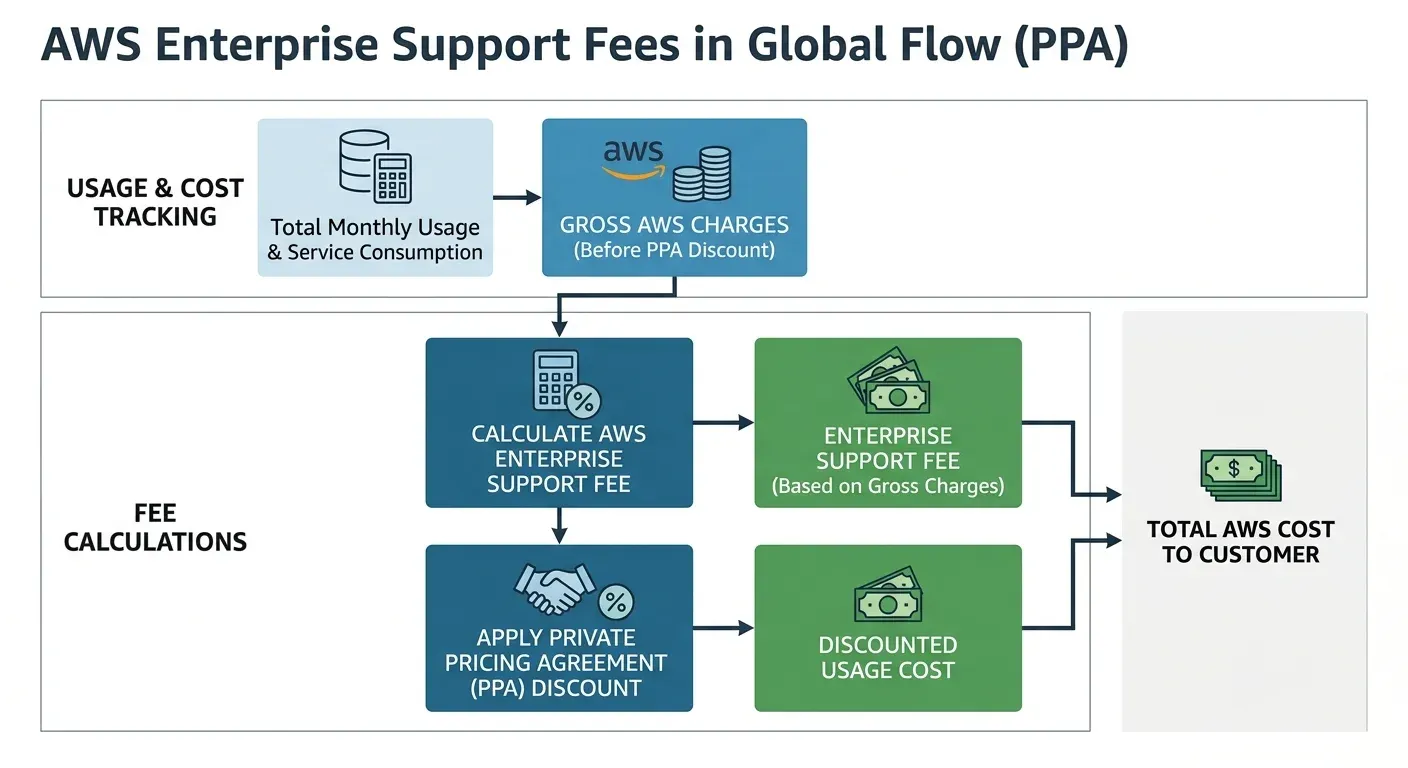
Enterprise Support and Well-Architected practice as eligibility groundwork. Enterprise Support is mandatory as part of a cross-service PPA or EDP, not an optional add-on. Decide who provides it before you negotiate: AWS directly, or an authorized AWS partner (see the next section). AWS has also simplified its plans, so see AWS Support plans in 2026 for what Enterprise Support costs and includes now. AWS also expects to see evidence of ongoing cost optimization and Well-Architected Review practice before it will size a favorable commitment. Have a recent review on file, or get one done, before you open the negotiation.
Exit terms and renewal benchmarking. Understand true-up obligations if you miss the commitment, and set a calendar reminder well before renewal to benchmark your rate again — pricing and eligible-service lists both evolve between terms.
Enterprise Support in a PPA: AWS direct or an authorized partner
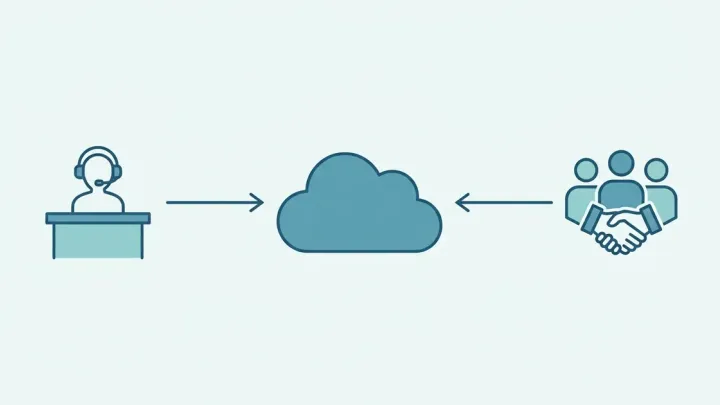
Because Enterprise Support is part of the deal, the buying question is not whether to carry it but who should provide it. Only an authorized AWS partner can provide partner-led support that meets the requirement, and ASCENDING, an AWS Premier Tier Services Partner and Managed Service Provider, is one.
| AWS Enterprise Support (direct) | Partner-led support (authorized partner) | |
|---|---|---|
| Provided by | AWS | An authorized AWS partner |
| Meets the PPA / EDP support requirement | Yes | Yes |
| Effect on your PPA | None | None, the PPA stays unchanged |
| Fee basis | Your gross monthly AWS charges, before the PPA discount | Partner-defined; confirm the basis in writing |
| Where to compare | AWS Support pricing | AWS Partner-Led Support vs. Enterprise Support |
Where a qualified partner improves the deal
A PPA itself is negotiated directly with your AWS account team — no partner involvement is required to sign one. Where an authorized AWS partner adds real value is in the preparation and the adjacent cost levers:
- Benchmarking your proposed commitment and rate against comparable deal shapes, so you’re not negotiating blind against AWS’s opening terms.
- Sizing the commitment to your actual workload forecast, using usage history rather than a growth target, to avoid the over-commitment risk described above.
- Meeting the Enterprise Support and Well-Architected Review groundwork. Since AWS expects both in place before it sizes a favorable commitment, a partner who already runs TAM-led Well-Architected Reviews and delivers Enterprise Support can walk in with that evidence ready, instead of scrambling to produce it mid-negotiation.
- Addressing the support-cost blind spot separately. Since a PPA doesn’t reduce Enterprise Support fees, that’s a distinct lever. An authorized AWS partner in the Managed Service Provider (MSP) program can provide partner-led support that satisfies the Enterprise Support requirement, without touching your PPA. Partner offers differ in price, coverage hours and response times, so compare them before you choose. ASCENDING’s AWS Partner-Led Support is built specifically around that gap.
Treat the PPA negotiation and the support-cost review as two separate line items in the same overall AWS cost conversation. Optimizing only one leaves savings on the table.
Buyer-ready checklist
- Re-baseline usage across AWS’s current cross-service eligible-services list, not last term’s narrower list
- Size the commitment from actual multi-year usage history, not a growth target
- Start renewal conversations roughly 90 days out to avoid negotiating under deadline pressure
- Get the eligible-services list in writing before agreeing to a commitment number
- Model effective rate at multiple future usage levels, not just at the commitment floor
- Review Enterprise/Business Support cost separately — a PPA discount does not reduce it
- Decide whether AWS or an authorized partner provides the mandatory Enterprise Support, and complete a Well-Architected Review before opening the negotiation, not during it
- Confirm true-up terms and calendar a pre-renewal benchmarking review
Bringing support cost into the same conversation
If Enterprise Support fees are a meaningful part of your AWS bill alongside your PPA commitment, it’s worth reviewing both in the same budget cycle. Request an estimate to see what meeting your PPA’s Enterprise Support requirement would cost through an authorized partner, with your PPA left completely untouched.
References
- AWS Private Pricing overview, retrieved 2026-10-05.
- AWS Enterprise Support plan, retrieved 2026-10-05.
- AWS Support pricing, retrieved 2026-10-05.
- AWS Managed Service Provider Program, retrieved 2026-10-05.
- Well-Architected Reviews, partner-delivered review program, retrieved 2026-10-05.
FAQ — AWS PPA and EDP Questions Buyers Ask
Is an AWS Private Pricing Agreement (PPA) different from the Enterprise Discount Program (EDP)?
Not a separate program. AWS's current committed-spend discount vehicle is officially called the Private Pricing Agreement (PPA). Many buyers still say "EDP" out of habit, but AWS now structures these commitments cross-service, covering 200+ eligible services under one agreement rather than a narrower legacy structure.
Is Enterprise Support required for an AWS PPA or EDP, and who can provide it?
Yes for a cross-service PPA: Enterprise Support is mandatory as part of the agreement. AWS can provide it directly, and an authorized AWS partner can provide partner-led support that satisfies the same requirement. AWS's eligibility review also expects evidence of ongoing cost-optimization and Well-Architected Review practice. See AWS Support plans in 2026 for the current plans.
Can I use a partner for AWS support if I have a PPA?
Yes. An authorized AWS partner can provide partner-led support that meets the Enterprise Support requirement, and your PPA stays unchanged. ASCENDING is an AWS Premier Tier Services Partner and Managed Service Provider; see AWS Partner-Led Support and the comparison with AWS Enterprise Support.
Does a PPA reduce our AWS Enterprise Support bill?
No. AWS calculates Enterprise Support fees on your gross monthly AWS charges, before any PPA discount is applied. A PPA lowers your usage rates; it does not touch the separate support line item, so support cost needs its own review during the same budgeting cycle.
Do we need an AWS partner to negotiate a Cross-Service PPA?
No. A PPA is negotiated directly with your AWS account team. Where a qualified partner adds value is benchmarking your proposed commitment and rate, delivering the Well-Architected Review evidence AWS expects, and providing the mandatory Enterprise Support as partner-led support.