

Contributing Writer · Developer Platforms
Daoqi Zhang
Contributing Writer, ASCENDING Inc
Daoqi writes about the collision between agentic AI and the software development lifecycle: AI-driven development methodologies, agent-assisted coding workflows, and the process questions engineering leaders hit when the tooling starts writing the code. His angle is operational — what changes for the team, not just the demo.
- AI-assisted development
- SDLC
- Engineering process
By this contributor
Articles by Daoqi Zhang
10 articles published on the ASCENDING Blog
-
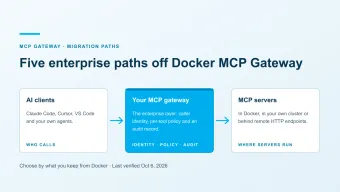
→GenAI · Jarvis AI · 12 min readDocker MCP Gateway Alternatives: Five Enterprise Migration Paths
Docker can keep running your MCP servers when you add central access controls. Compare five migration paths and check what happens to credentials and isolation.
-
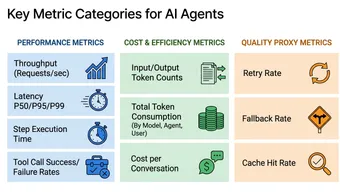
→GenAI · Jarvis AI · 8 min readOTEL Observability for AI Agents: Traces, Logs, and Metrics Explained
How OpenTelemetry instruments AI agents: distributed traces for prompt tuning, structured logs for health, and metrics for token usage and latency.
-
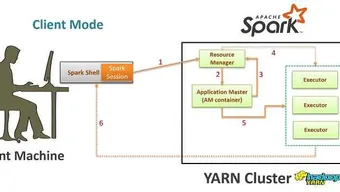
→Data Analytics · 6 minsInteractive Spark Mode on EKS Cluster - Debugging and Troubleshooting
Set up interactive Spark on an EKS cluster to debug jobs in real time, test data processing logic iteratively, and tune performance without full re-runs.
-
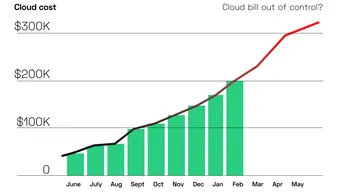
→Cloud Computing · 5 minsEKS Best Practice - Cost Monitoring per Workload
Track Kubernetes cost per workload on EKS. Compare Kubecost, Datadog and CastAI, then build per-Spark-job cost monitoring with Prometheus and Grafana.
-
→Cloud Computing · 3 minsEKS Best Practice - Kubernetes Secrets Management Part II
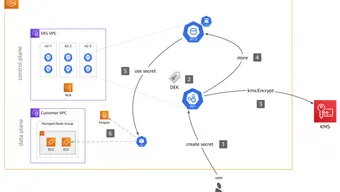
Encrypt Kubernetes secrets with AWS KMS before committing them to Git, decrypt them in Terraform, and use EKS audit logs to track who reads each secret.
-
→Cloud Computing · 8 minsEKS Best Practice: Storing Kubernetes Secrets Securely
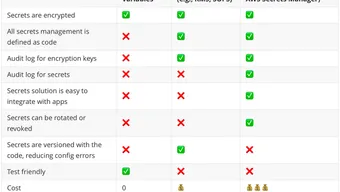
Kubernetes stores Secrets unencrypted in etcd by default. Compare three ways to pass secrets into Amazon EKS: env vars, KMS or Sealed Secrets, and a vault.
-
→Cloud Computing · 2 minsEKS Best Practice - Authentication & Authorization
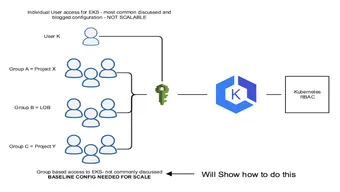
Amazon EKS uses IAM to authenticate and Kubernetes RBAC to authorize. Map least-privilege IAM roles to RBAC, move to access entries, and give pods IAM roles.
-
→Cloud Computing · 4 minsEKS Best Practice - Infrastructure As Code Using Terraform
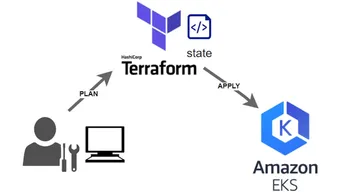
Provision Amazon EKS with Terraform to stop infrastructure drift, review changes before they deploy, and keep remote state, modules and versions reproducible.
-
→Cloud Computing · 3 minsEKS Best Practice - SSO Integration
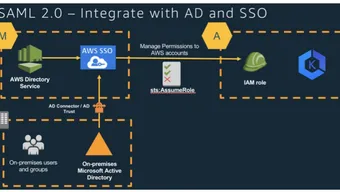
Integrate SSO with Amazon EKS through Okta or AWS SSO: limit IAM role trust policies to identity provider groups and map each role to least-privilege RBAC.
-
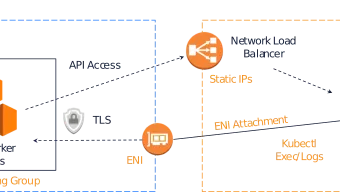
→Cloud Computing · 2 minsEKS Best Practice - Networking
Reserve small /28 cluster subnets for EKS network interfaces and size /19 worker subnets for the VPC CNI, so cluster upgrades never run out of IP addresses.
Our contributors
Other authors
-
Ryo Hang
Editor-in-Chief
-

Gloria Qian Zhang
Contributing Editor
-

Michael Clough
Editorial Advisor
-

Elias Saljuki
Contributing Editor
-

Edrees Saljuki
Contributor
-

Soraya Zheng
Contributing Writer
-

Alexander Groman
Contributing Writer
-

Kelvin Yu
Contributing Writer
-

Tommy Tao
Contributing Writer
-

Cynthia Zhang
Contributing Writer
-

Merve Tengiz
Contributing Editor
-
Abby Feng
Contributing Writer
-

Arjun Vijay
Contributing Writer
-

Celeste Shao
Contributing Writer
-

Chandler Benson
Contributing Writer
-

Ginny Casuccio
Contributing Editor
-

Laura Bradley McCoy
Contributing Writer