


Shortlist ChatGPT Enterprise when you are expanding an established ChatGPT deployment; shortlist Claude Enterprise when Claude is already central to your teams’ work. Both offer enterprise controls, so the ChatGPT Enterprise vs Claude Enterprise decision should turn on accepted work, enforceable access and total operating cost. Existing adoption is a starting advantage to test, not a reason to skip comparison. For a new deployment, run the same business tasks in both before choosing.
Start with one department’s recurring work and the controls it requires. If you cannot name the data owner, approved sources and success criteria, complete the AI readiness checklist before buying broadly.
Documentation reviewed October 2, 2026. The comparison below covers documented product capabilities; the pilot thresholds are editorial recommendations, not reported vendor benchmarks.
ChatGPT Enterprise vs Claude Enterprise at a glance
The table separates documented capabilities from the evidence your team should request. Feature availability still needs verification in the proposed workspace and agreement.
| Decision area | ChatGPT Enterprise | Claude Enterprise | What should decide the purchase? |
|---|---|---|---|
| Employee work | ChatGPT, with Work and Codex capabilities subject to configuration | Claude, with Claude Code and Cowork in the current Enterprise offering | Accepted outputs in the exact applications employees will use |
| Identity | SAML SSO, SCIM and role-based access controls | SSO, Enterprise SCIM and custom roles | Successful onboarding, role changes and offboarding |
| Connected systems | Approved apps and plugins; connection permissions matter | Workplace connectors with organization and role controls | Correct access for ordinary employees, including denied requests |
| Oversight | Analytics, Compliance API and retention controls | Analytics API, Compliance API, audit logs and retention controls | Evidence for your actual workflow and retention requirements |
| Commercial model | Enterprise pricing requires a sales discussion | Current Enterprise seats and usage are charged separately; older plans differ | Written terms and measured workload cost |
| Deployment boundary | Review workspace, cloud task and local execution boundaries | Review workspace, desktop, coding and connector boundaries | A complete diagram showing where company data goes |
The capability baseline comes from OpenAI’s plan and enterprise-control documentation and Anthropic’s Enterprise plan overview. Neither a feature count nor a generic model leaderboard answers whether the platform handles your approval process or produces a usable financial analysis.
Separate the workspace, API and coding decisions
Buying an employee workspace
This is a decision about the environment people use to research, analyze information and produce work. Evaluate collaboration, file handling, administration and the connections needed by the department. Record which product surfaces are included and enabled in the offered plan.
Building an application with a model API
A customer-facing application or automated backend has different requirements: credentials, application authorization, request volume, storage and service ownership. Ask for its commercial and security scope separately. Pricing usage at API rates does not, by itself, establish an API budget or authorize a separately developed application.
Equipping developers
Claude Code and Codex introduce repository, terminal, execution and device controls. A successful document-summary pilot does not validate those controls. Use our enterprise coding-agent comparison for that evaluation and the Claude Code managed settings guide for rollout policy. For HIPAA scope by connection route, see Governing Claude Code for IT.
This separation allows engineering and business teams to share a procurement process without treating every tool as the same deployment.
Compare permissions through employee scenarios
Test joining, changing roles and leaving
SSO establishes identity; SCIM automates membership changes. The useful procurement question is what happens after an employee moves from Finance to Sales.
Anthropic’s provisioning documentation distinguishes invitation, just-in-time provisioning and SCIM. It also distinguishes assigning a seat or role from synchronizing groups for capability access. Configure the intended lifecycle rather than assuming a successful login validates it.
In both candidate workspaces, create a test employee, assign the intended role, change departments and remove access. Record the time until each change takes effect. Then check connected accounts, shared resources and any automation that used that identity. Define an acceptable revocation interval with your security owner before testing.
Test the account that actually reaches company data
An integration’s logo proves little about its permission behavior. OpenAI’s Work overview explains that approved shared or agent-owned connections use the connected account’s permissions, which can differ from the requesting employee’s access. It also separates local execution from cloud coordination and notes that saved content has its own retention behavior.
For Claude, role-based permissions can govern connector and tool availability. Grants across custom roles are additive: a block in one role does not cancel another role’s grant. Evaluate the employee’s combined permissions.
Use an allowed document, a restricted document and a document whose access has just been revoked. Ask the same question with two test users. Inspect source citations, copied summaries and shared outputs as well as retrieval. Repeat after changing the source permissions.
For integration architecture beyond this buying decision, see ChatGPT connectors vs MCP.
Compare enterprise pricing using cost per accepted task
The published Claude Enterprise model separates the seat fee from metered usage and describes legacy arrangements that can remain until renewal. OpenAI lists Enterprise as a sales-led purchase. A comparison built from unrelated public team-plan prices will miss those differences.
Give both vendors the same headcount and workload estimate. Request a written answer covering:
- Seats: minimum commitment, billing term, reassignment, inactive users and renewal changes.
- Usage: included allowances, metering, overages, credits, spend limits and what happens when a limit is reached.
- Product scope: business work, coding tools, automation and separately billed API usage.
- Delivery: connector setup, identity integration, support, training and recurring administration.
- Exit: export access, deletion process, transition assistance and remaining commitments.
Use a common calculation:
Cost per accepted task = allocated subscription, usage, integration, administration and human review cost ÷ accepted tasks.
Keep cash spending and estimated labor value visible as separate components. Reduced review time releases capacity; it does not automatically reduce payroll. Include rejected attempts and rework in the numerator so a fluent but unreliable answer does not appear artificially inexpensive.
For usage allocation across departments, use the AI token cost and budget guide.
Run a controlled ChatGPT vs Claude business pilot
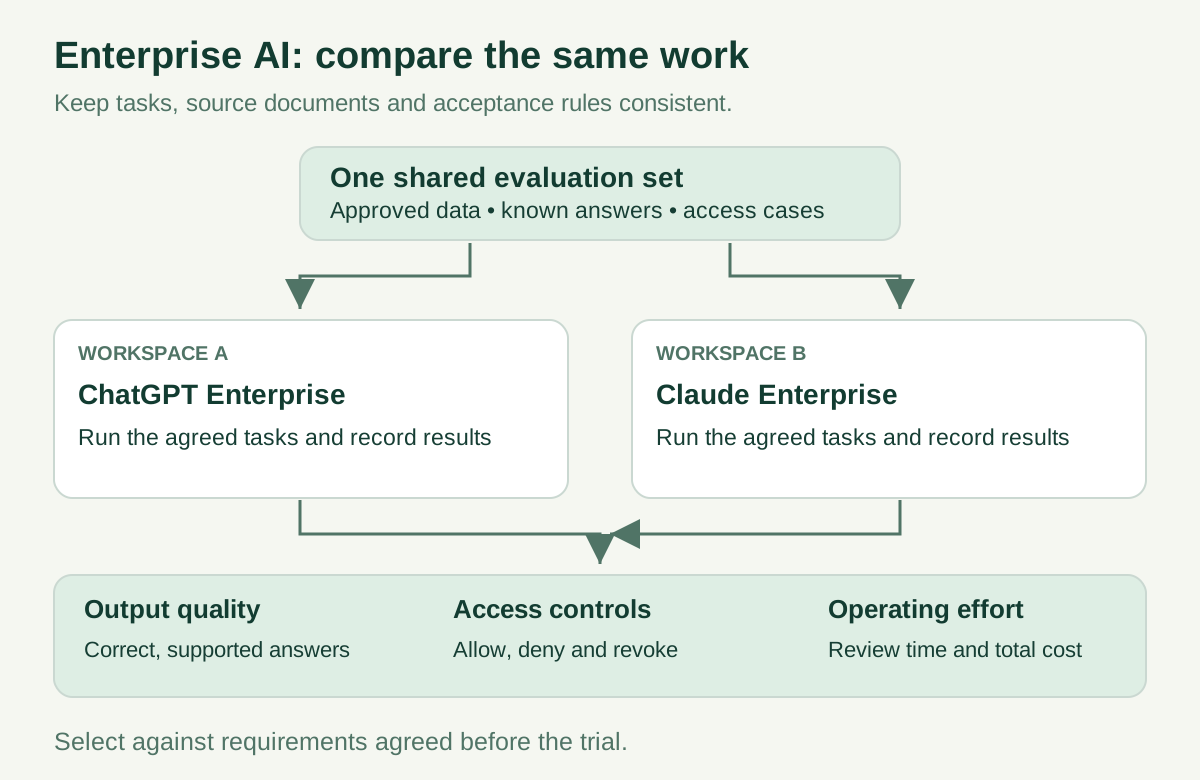
Figure: Give both workspaces the same task set and permitted sources, then evaluate accuracy, access and operations before selecting a platform.
Build a representative task set
Use a ten-business-day pilot with a small group of regular employees and named reviewers. Suggested starting scope: 30 tasks across three recurring workflows, plus 10 separate access and failure scenarios. This is a screening exercise, not a statistically conclusive benchmark or security certification.
| Workflow | Example input | Reviewer checks |
|---|---|---|
| Policy questions | Approved policy, old version and employee question | Correct current passage; unsupported exceptions identified |
| Business analysis | A permitted dataset and an agreed metric definition | Correct calculation, date range, exclusions and reproducible result |
| Operational drafting | Source notes, required template and audience | Required facts preserved; missing information flagged; usable output |
Keep source versions, accounts, task instructions and review criteria consistent. Record model selection and enabled tools for each run. Give each product comparable setup time and permit documented configuration improvements; preserve those changes so another team can repeat the test.
Rotate which product employees use first. Have reviewers score outputs without vendor labels where practical. Measure total time from request to approved deliverable, including uploads, corrections and checking.
Set acceptance criteria before seeing the answers
For an initial low-risk pilot, consider these starting gates and adapt them with the accountable owner:
- At least 27 of 30 business tasks meet the written rubric after no more than one correction cycle.
- Every numerical answer matches the approved calculation or clearly requests missing information.
- All 10 access and failure scenarios pass, with no restricted content disclosed or unauthorized write completed.
- Median time to an accepted result improves by at least 20% against the team’s recorded baseline.
- An administrator can reconstruct the selected audit sample and demonstrate the agreed offboarding interval.
Passing a small sample does not prove the absence of future failures. Record defects, affected workflows and corrective actions. Re-run failed cases before expanding access.
If both candidates pass, compare operating cost and employee effort. If one passes only after extensive manual repair, include that work in its result. If neither passes, narrow the workflow or fix the sources before expanding the purchase.
Verify deployment boundaries and an exit path
Ask each provider to mark where prompts, retrieved data, uploaded files, generated work, logs and backups are processed and stored. Identify every connected service. A desktop client, encryption key or private connector does not establish that model inference runs inside infrastructure your team operates.
Specify residency, retention and model-hosting requirements separately. If your requirement is a customer-hosted application or a different inference route, use the private LLM deployment buyer guide to scope that architecture.
Before signing, repeat one complete workflow in the other candidate using approved source files and a documented task specification. Record which instructions, integrations and configurations can be reused, which must be rebuilt, and which artifacts cannot be exported in a usable form. Test revoking the first workspace’s connections after the handoff. This makes switching effort observable.
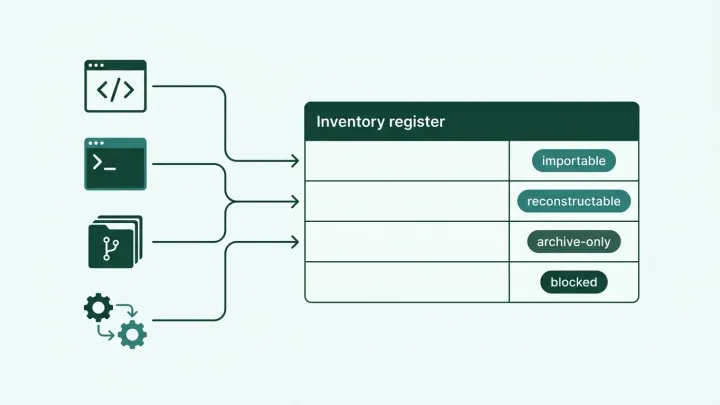
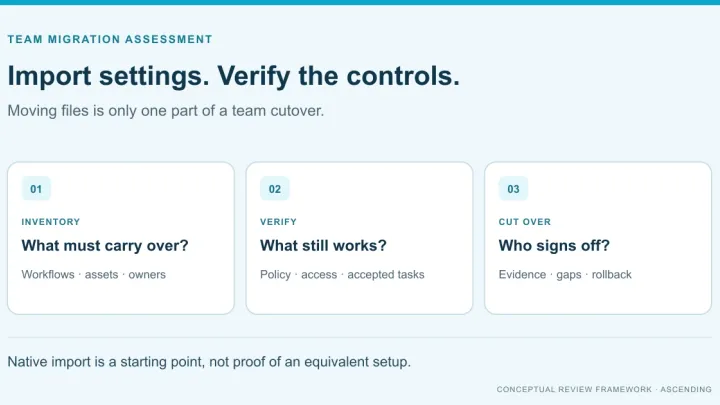
For an organizational move, use the company ChatGPT-to-Claude migration assessment. It separates workspace assets from API applications and explains why personal-account export instructions aren’t a reliable Enterprise migration plan. The assessment includes an asset worksheet and a pilot test plan, not a promise of automatic transfer.
Make the purchase around an accepted workflow
Select the platform that passes mandatory access and deployment requirements, produces accepted work and has an operating model your team can sustain. Extend the rollout department by department using the same evidence.
ASCENDING publishes this guide and provides Jarvis AI implementation services. If the evaluation reveals a need for a customer-hosted assistant or reusable governed integrations, discuss a scoped assessment with ASCENDING. Bring the task set, data boundary, failed cases and vendor quotes so the discussion starts with the workflow you need to deliver.
References
- OpenAI: Pricing and enterprise controls
- OpenAI: ChatGPT Work overview
- Anthropic: Enterprise plan overview
- Anthropic: JIT and SCIM provisioning
- Anthropic: Enterprise role-based permissions
Questions about choosing ChatGPT or Claude for enterprise
Is ChatGPT Enterprise or Claude Enterprise better for business?
Choose using representative work, access tests and operating cost. Existing workflows can favor either platform; a controlled pilot should establish the result.
Do both Enterprise products support SCIM?
Yes. Both document Enterprise SCIM support. Test provisioning, role changes and offboarding; workspace membership alone does not establish downstream data access.
How should we compare enterprise pricing?
Compare written offers using the same users and workload. Include seats, usage, integrations, administration, review effort and migration costs.
Does an enterprise subscription mean private model hosting?
A workspace subscription does not establish customer-operated inference. Request a data-flow diagram covering execution, model endpoints, storage and connected services.
Should Claude Code decide our business-assistant purchase?
Evaluate developer workflows separately. Then include their licensing, permissions and support requirements in the combined procurement decision.